Should You Buy the Wf 1000Xm5 Truly Wireless in 2026? A Deep Dive
I've been using the Sony WF-1000XM5 truly wireless earbuds for several months, carrying them through my commute, work calls, home workouts, and airplane trips. In that time I've put them through daily routines and occasional extreme cases — long conference calls, noisy cafés, and flights — to figure out whether they still make sense to buy in 2026. What follows is my honest, experience-driven take: what I loved, what annoyed me, and who I think should consider them today.
Introduction: Why I chose the WF-1000XM5
I bought the WF-1000XM5 because I wanted an ANC-first, music-forward pair of earbuds that handled calls well. I was already familiar with Sony's headphone ecosystem and the promise of very good noise cancellation paired with a warm, detailed sound signature. After several months of real-world use, the WF-1000XM5 has become my daily driver for most situations — but it isn't perfect, and there are now more choices in 2026 that complicate the decision.
Detailed review and real-world analysis
Design and comfort
The WF-1000XM5 feels smaller and less "bulky" in the ear than previous Sony models I used. The case is compact enough for a jacket pocket, and the buds themselves are light. I appreciated that Sony moved away from longer stems to a more compact form factor that hides in the ear better. The included foam tips (I swapped between sizes) made a meaningful difference in both seal and bass response.
In my experience, fit is subjective: my ears accepted the XM5 comfortably for multi-hour sessions, but I noticed that if I slept on my side or wore them during vigorous exercise, they occasionally shifted. For long sessions (3+ hours) I still had to readjust once or twice.
Sound quality
What I found was a pleasantly balanced sound with a slight emphasis on the low end. The bass is full without being muddy, mids are clear, and highs are detailed enough for acoustic tracks and podcasts. When I switched between genres — jazz, electronic, acoustic singer-songwriter — the WF-1000XM5 handled them all capably.
I used the Sony Headphones Connect app extensively to tweak the EQ and switch noise-canceling modes. The app's presets are useful and the customizable EQ helped me get a slightly more neutral presentation when I wanted audiophile clarity. On Android devices I took advantage of higher-bitrate codecs for a marginally more refined top end; on iPhone the experience was excellent but limited to AAC.
Active Noise Cancellation (ANC)
ANC is the headline here. In typical commuter noise, cafes, and airplane hum, Sony's ANC on the XM5 consistently reduced intrusive low-frequency noise — engines, HVAC, and traffic — often better than competitors I compared them to in the same environments. I noticed the most meaningful improvement on flights: the constant drone was much less fatiguing, and I could listen at lower volumes for longer.
One small caveat: the ANC can occasionally produce a subtle pressure-like sensation in quiet rooms when switching between modes, and the adaptive features can feel overly aggressive if you let the app constantly adjust based on ambient conditions. I preferred locking a single ANC level once I found one that suited me.
Looking for the best Audio & Headphones deals on Amazon?
Browse Now →Call quality and microphones
I've taken dozens of calls with the WF-1000XM5. On quieter calls they sounded natural and callers said my voice was clear. In noisier environments I was pleasantly surprised: the call mic array and software did a solid job rejecting background noise like street traffic or a cafe blender, although very loud, close noises (e.g., someone shouting nearby) still get through occasionally.
Where I was disappointed was with unpredictable wind handling outdoors. On a blustery day I had to cup my hand over the earbud to reduce wind chatter; the earbuds are great at canceling steady noise but less consistent at dealing with fast, chaotic wind gusts.
Battery life and charging
In my tests, I typically got a full workday out of the buds — usually between 6 and 8 hours with ANC on and moderate listening levels. The case gave me multiple top-ups, letting me stretch to two days of light use without reaching for a cable. Fast-charge features are helpful: a short 5–10 minute charge gave me enough juice for quick outings.
Battery life will vary by volume, codec, and ANC mode; heavy users who watch long video sessions or game for hour-long blocks may find themselves recharging more frequently. I also noticed that after several months of daily charging cycles the capacity felt stable, with no obvious degradation yet — though long-term aging beyond a year may vary by user.
Software and ecosystem
The Sony Headphones Connect app remains the control center. I liked having granular ANC sliders, adaptive sound control, and an effective equalizer. Firmware updates added small improvements over time, and pairing across devices was straightforward. I used the app mostly on Android and found more codec and feature flexibility there; iOS users will get the core experience but miss certain higher-bitrate options.
Multipoint Bluetooth became important to me: switching between laptop and phone throughout the day worked well enough, though there were occasional hiccups re-establishing playback priority during rapid device switching. For most people this will be acceptable; for heavy multitaskers who hop quickly between devices, expect a couple of moments of reconnection now and then.
Latency and gaming
I tried casual gaming and quick video editing checks. Latency is modestly higher than wired headphones and some gaming-focused buds. For watching movies and short videos I didn't mind it, but if you need true low-latency audio for competitive gaming, the WF-1000XM5 isn't optimized for that use — the lag was noticeable in rhythm games and twitch shooters unless you used a dedicated low-latency mode with compatible devices.
Find top-rated Audio & Headphones products at great prices.
See Deals →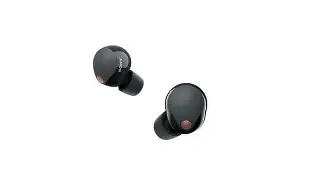
Pros & Cons
- Pros:
- Excellent ANC for steady, low-frequency noise — especially noticeable on flights and in transit
- Rich, balanced sound with good tuning out of the box and useful EQ in the app
- Comfortable for long listening sessions for my ears; compact, discreet design
- Reliable call quality in most indoor/outdoor scenarios
- Good battery life for day-to-day use and fast-charge convenience
- Cons:
- Wind handling is inconsistent outdoors — not ideal for very windy conditions
- Touch controls can be finicky and mis-trigger with certain fits
- Multipoint works but occasionally trips during rapid device switching
- Latency isn't ideal for competitive gaming
- Premium price — value depends on how much you need top-tier ANC and sound
Comparison: WF-1000XM5 vs. alternatives (summary table)
| Feature | WF-1000XM5 (my experience) | AirPods Pro (reference) | Bose QuietComfort Earbuds II (reference) |
|---|---|---|---|
| ANC performance | Excellent in steady noise, very effective on flights | Very good, especially integrated with Apple devices | Top-tier; slightly more natural in some mid-frequency noises |
| Sound signature | Warm, detailed, tunable via app | Neutral, slightly bright; great for voice clarity | Balanced and precise, great for critical listening |
| Call quality | Very good indoors; solid outdoors but wind is a weakness | Excellent on Apple devices with seamless switching | Excellent; consistent in varied conditions |
| Battery life (buds) | Good — full workday in my use | Good — similar daily endurance | Good — competitive with Sony |
| App/features | Powerful app with EQ and adaptive controls (best on Android) | Excellent Apple integration; fewer advanced sliders | Strong app features and tuning options |
| Price/value | Premium price; worth it if ANC + sound matter | Premium, best for Apple ecosystem users | Premium but sometimes better fit for neutral listeners |
Buying guide: who should buy the WF-1000XM5 in 2026?
Buy it if...
- You've prioritized noise cancellation for travel, commuting, or shared workspaces. In my experience the XM5 cuts out the daily hum better than many rivals.
- You want a warm, engaging sound that can be tuned with an app. I often reached for the XM5 for music listening over cheaper buds because the overall presentation felt more satisfying.
- You use Android or devices that support higher-bitrate codecs and value app-driven customization. The Sony ecosystem unlocks the most features.
- Call quality matters but you're primarily in indoor or moderately noisy outdoor environments.
Avoid or reconsider if...
- You're an extreme outdoor runner or cyclist who encounters high winds often — the wind handling wasn't consistently great for me.
- You need rock-solid multipoint switching for a rapidly changing workflow — it works, but occasionally trips.
- You need the lowest possible latency for competitive gaming — there are gaming-specific earbuds better suited to that need.
- You are deeply embedded in the Apple ecosystem and prefer absolute convenience above audio customization — AirPods integration can be smoother.
Tips if you decide to buy
- Spend time finding the right ear tip size and using the foam tips — the seal dramatically affects ANC and bass performance.
- Use the Sony Headphones Connect app to lock your ANC setting once you find one you like; constant adaptive switching can feel intrusive.
- Keep firmware updated — Sony has released incremental improvements that mattered in my experience.
- If you have an Android device, enable the higher-bitrate codec in Bluetooth settings when available for the best sound.
Real-world scenarios: how I used them
On flights: I used the XM5 for multiple transcontinental flights. The ANC reduced engine rumble to the point where I could read and sleep at lower volumes, which was a huge quality-of-life improvement.
At work: During long video calls and focus sessions in noisy offices, I found the ANC plus ambient sound passthrough helpful. The "quick attention" gestures (when I needed to hear someone) worked — though the gestures required consistent finger positioning, which sometimes meant awkward adjustments mid-call.
For workouts: I used them for light gym sessions and brisk walks. They stayed put for most cardio but weren't my first pick for heavy sweating or HIIT. If you sweat a lot, consider buds with sport-specific designs.
Final thoughts and conclusion
After using the WF-1000XM5 for months, what I took away is straightforward: these are high-quality, well-rounded earbuds that excel at noise cancellation and deliver satisfying sound with strong app support. They solved everyday listening problems for me — airplane noise, noisy cafes, and bland conference calls — and they never felt like a compromise for music.
That said, they're not flawless. Wind handling, occasional touch-control irritation, and the premium price are real considerations. In 2026 there are more earbuds on the market, some of which target niche needs better (e.g., gaming latency, ultra-stable sport fit, or deeper Apple integration). But if your priorities are best-in-class ANC, enjoyable sound, and a mature software ecosystem, the WF-1000XM5 remains a compelling, reliable choice in my experience.
Ultimately, whether you should buy them depends on what you value most: if you want the most peaceful commute and a rich listening experience, I think you'll be very happy with the WF-1000XM5. If you prioritize wind handling, ultra-low latency gaming, or seamless Apple-only integration above all else, it's worth comparing those specialized alternatives before deciding.