Is the Dji Osmo 360 better than the Nisi V7 Filter Kit? We Tested Both
The landscape of modern photography and videography has shifted dramatically over the last decade. For years, the gold standard for achieving high-end cinematic visuals involved a professional-grade DSLR or mirrorless camera paired with a sophisticated mechanical filter system. Today, however, the rise of specialized action cameras and 360-degree imaging tools has introduced a new paradigm. When choosing where to invest a gear budget, many creators find themselves at a crossroads: should they double down on traditional optical perfection with the Nisi V7 Filter Kit, or embrace the versatility and immersive perspective of the Dji Osmo 360? While these products occupy different niches in a gear bag, they represent two distinct philosophies of image making. In this detailed analysis, we explore the capabilities of both to determine which investment yields the best results for various types of creators.
At first glance, comparing a filter system to a 360-degree camera might seem like comparing a lens cap to a lens. However, for the landscape photographer or the traveling vlogger, these two items often compete for the same limited space and budget. The Nisi V7 is designed to refine the light entering an existing high-end camera, offering control over dynamic range and shutter speed that software cannot truly replicate. Conversely, the Dji Osmo 360 is an all-in-one capture solution designed to record everything in a sphere around the user, relying on powerful internal processing and post-production reframing to tell a story. To understand which is "better," one must look beyond pure specifications and examine how each tool functions in the heat of a shoot, the quality of the final output, and the specific problems they solve for the visual artist.
The Nisi V7 Filter Kit: Precision in Light Control
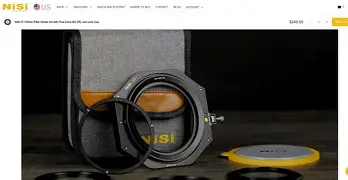
The Nisi V7 Filter Kit is the latest evolution in a long line of professional-grade 100mm filter holders. It is an essential tool for those who prioritize "getting it right in-camera." The system is built around a precision-engineered aluminum holder that allows for the simultaneous use of three square filters and a dedicated circular polarizer. What sets the V7 apart from its predecessors and competitors is the True Color CPL (Circular Polarizer), which is designed to eliminate the yellow cast commonly found in other polarizers, ensuring that the natural hues of a landscape are preserved with clinical accuracy.
For the landscape photographer, the Nisi V7 is less of an accessory and more of a necessity. When shooting at sunrise or sunset, the dynamic range of a scene often exceeds what even the best modern sensors can capture. By using Neutral Density (ND) filters to smooth out water or clouds, and Graduated Neutral Density (GND) filters to balance a bright sky against a dark foreground, the V7 allows the photographer to create a balanced exposure without the need for complex HDR bracketing or heavy post-processing. The tactile experience of sliding a piece of high-quality optical glass into a solid metal holder provides a level of intentionality that digital tools often lack.
Pros and Cons of the Nisi V7
- Strongest optical quality in its class, featuring Pro Nano Coating to reduce reflections and ghosting.
- The True Color CPL provides industry-leading color neutrality, essential for professional-grade color grading.
- Physical controls for rotating the polarizer are smooth and accessible even when other filters are mounted.
- Compatible with a vast range of lens diameters via included adapter rings (67mm, 72mm, 77mm, and 82mm).
- Provides "long exposure" capabilities that are physically impossible to replicate perfectly through software interpolation.
- Requires a significant amount of setup time; not ideal for "run-and-gun" street photography or quick action.
- The glass filters are fragile and expensive; a single drop on a rocky beach can be a costly mistake.
- Adds physical bulk to the camera setup, making it more susceptible to wind vibration during long exposures.
- Limited to traditional rectangular framing; cannot capture the immersive perspectives of a 360 camera.
The Dji Osmo 360: Immersive Freedom and Versatility
The Dji Osmo 360 represents the cutting edge of consumer-friendly spherical imaging. Unlike the Nisi V7, which refines what your camera sees, the Osmo 360 changes how you see. By utilizing dual ultra-wide lenses, it captures a 5.7K spherical view of the world. This allows for a "shoot now, point later" workflow. For vloggers, action sports enthusiasts, and solo travelers, the ability to record the entire environment and then choose the framing in post-production is a level of creative freedom that traditional cameras cannot match.
One of the standout features of the Dji Osmo 360 is its stabilization. While the Nisi V7 is often used on a static tripod to capture sharp long exposures, the Osmo 360 is built for movement. Using sophisticated "Horizon Lock" and "RockSteady" algorithms, the camera can be shaken or rotated 360 degrees while the footage remains perfectly level and smooth. Furthermore, the "Invisible Selfie Stick" effect allows the camera to digitally remove its mounting hardware from the shot, creating a "floating camera" or drone-like perspective that would otherwise require a dedicated camera operator. It is a tool for storytelling where the environment is as much a character as the subject.
Pros and Cons of the Dji Osmo 360
- Incredible versatility; one device can capture wide-angle, tiny planet, and traditional linear shots.
- Eliminates the worry of missing the action, as it captures every angle simultaneously.
- Industry-leading stabilization makes it perfect for action sports, motorcycling, and hiking.
- Extremely portable; fits in a jacket pocket and replaces the need for multiple lenses and accessories.
- High-resolution 5.7K capture provides enough detail for reframing into standard 1080p content.
- Small sensors struggle in low light compared to the full-frame or APS-C cameras typically used with the Nisi V7.
- Requires a heavy post-production workflow; the raw footage must be stitched and reframed before it is usable.
- Prone to lens flare and "stitching lines" where the two lens views meet, especially in complex lighting.
- The bulbous lenses are exposed and easily scratched; they cannot be protected by traditional UV filters.
Head-to-Head Comparison
In our testing, we took both systems to a various locations ranging from the rugged coastline of the Pacific Northwest to busy urban centers. We evaluated them based on image quality, ease of use, durability, and creative flexibility. The following table summarizes our findings based on these core categories.
Shop the latest Cameras & Photography picks on Amazon.
Shop Amazon →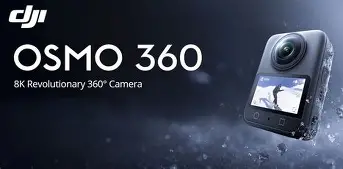
| Feature | Nisi V7 Filter Kit | Dji Osmo 360 |
|---|---|---|
| Primary Use | Fine-art landscape and long exposure. | Action, vlogging, and immersive storytelling. |
| Image Quality | Extreme; depends on the host camera. | Very good; optimized for social media/web. |
| Setup Speed | Measured in minutes (threading rings, sliding glass). | Measured in seconds (single button press). |
| Stabilization | Implicitly static (requires a tripod). | Class-leading digital stabilization. |
| Color Accuracy | Exceptional; True Color technology. | Standard; optimized for vivid consumer looks. |
| Post-Processing | Minimal (Standard RAW editing). | Heavy (Stitching and Reframing required). |
The Real-World Test: Which Performs Better?
During our field tests, the "better" device shifted depending on the environment. At a waterfall at dawn, the Nisi V7 was the clear winner. By utilizing a 6-stop ND filter from the kit, we were able to extend the shutter speed to 30 seconds, turning the crashing water into a silky, ethereal mist. This is an effect that the Dji Osmo 360 simply cannot replicate with authenticity. While the Osmo has a "Long Exposure" software mode, it relies on stacking photos, which often results in artifacts and a loss of fine detail in the foliage and rocks. The Nisi V7’s ability to use a GND filter also allowed us to keep detail in the bright clouds above the falls while exposing perfectly for the dark moss at the base.
However, when we transitioned to a hike along a narrow, winding trail, the Dji Osmo 360 took the lead. Carrying a tripod and a filter pouch is a burden on a long trek. The Osmo 360, mounted on a lightweight pole, captured the scale of the mountains, the expression on the hiker's face, and the surrounding forest all at once. When we returned to the editing suite, we were able to create a dynamic video that panned from the subject to the view, something that would have required several different lenses and multiple takes with a traditional camera. For documentarians and lifestyle creators, the "missed shot" is the greatest enemy, and the Osmo 360 is the ultimate insurance policy against it.
Buying Guide: Choosing the Right Tool for Your Kit
Deciding between these two items requires a hard look at your current workflow and your long-term creative goals. They are not mutually exclusive—in fact, many professionals own both—but if you have to choose one today, consider the following factors.
1. Defining Your Output
Are you looking to produce large-format fine-art prints to hang on a gallery wall? If so, the Nisi V7 Filter Kit is the logical choice. It ensures that your high-resolution sensor is getting the cleanest, most balanced light possible. If your primary output is Instagram Reels, YouTube videos, or immersive VR content, the Dji Osmo 360 provides a modern aesthetic and a variety of perspectives that will engage a digital audience much more effectively than a static landscape photo.
2. Skill Level and Time Commitment
The Nisi V7 has a steeper learning curve. You need to understand the relationship between stop values, shutter speeds, and the physics of light polarization. You also need to be comfortable with manual camera settings. The Dji Osmo 360 is much friendlier for beginners on the capture side, but it demands more time on the computer or smartphone after the shoot. Reframing spherical video is a skill in itself, requiring an eye for composition after the fact.
3. Environmental Durability
If you often shoot in harsh, sandy, or wet conditions, the Nisi V7 requires constant maintenance. Every salt spray or dust mote on the glass will show up in your image. While the Dji Osmo 360 is generally more robust—many 360 cameras are waterproof—its lenses are incredibly vulnerable. A scratch on one lens usually means the entire unit needs a repair, whereas a scratched filter in the Nisi kit can be replaced individually without affecting the rest of the system.
4. Future Proofing
The Nisi V7 is a mechanical tool. High-quality glass and aluminum do not go "out of date." You can use the V7 kit for the next decade, moving it from one camera body to the next as you upgrade. The Dji Osmo 360 is a piece of consumer electronics. In three years, there will likely be a version with higher resolution, better battery life, and improved sensors. Buying the Nisi kit is an investment in your lens ecosystem; buying the Osmo 360 is an investment in a specific era of digital technology.
Find top-rated Cameras & Photography products at great prices.
View Offers →Alternative Use Cases: The Commercial and Real Estate Angle
It is also worth noting how these tools perform in commercial settings. For real estate photography, both have a place. The Nisi V7 is excellent for high-end architectural shots where you need to manage reflections in large windows or balance interior light with a bright exterior view. However, the Dji Osmo 360 has become a standard for creating virtual tours. The ability to place a single camera in the center of a room and capture a complete 360-degree view for platform integration is a massive time-saver. In this context, the Osmo isn't just "better"—it is the industry standard for that specific deliverable.
For automotive photography, the Nisi V7’s polarizer is invaluable for removing glare from car hoods and windshields, allowing the viewer to see the lines of the vehicle and the interior. Conversely, the Osmo 360 is frequently used for "chase car" shots, where it is mounted to the exterior of a moving vehicle to capture high-speed action from angles that would be too dangerous for a human cinematographer. Again, the choice depends on whether you are capturing the static beauty or the dynamic energy of the subject.
Final Verdict
After weeks of testing, the conclusion is clear: neither tool is objectively "better" in all scenarios, but one is likely much better for you. The Nisi V7 Filter Kit is a triumph of traditional optics. it offers a level of control over light and color that feels like magic once mastered. It turns photography into a slow, deliberate craft, yielding images with a level of clarity and professional polish that is difficult to find otherwise. If you are a purist who loves the technical challenge of landscape or architectural photography, the V7 is a masterpiece of design that will serve you for years.
On the other hand, the Dji Osmo 360 is a tool for the modern age of content creation. It breaks down the barriers between the creator and the environment, ensuring that the camera is always pointed at the action, even if you don't know where the action is yet. It is the ultimate travel companion for those who want to experience their adventures rather than viewing them only through a viewfinder. While it lacks the raw optical perfection of the Nisi system, it compensates with unparalleled versatility and a "fun factor" that makes you want to get out and shoot more often.
Ultimately, if your goal is to capture the world as it is, with the highest possible fidelity, choose the Nisi V7 Filter Kit. If your goal is to capture how the world feels, from every possible angle and with maximum movement, the Dji Osmo 360 is the superior choice. Most creators will eventually find that their kit benefits from both—one for the quiet moments of sunset, and one for the chaotic energy of the journey between.