Biggest Optix Mag271Cqr Buying Mistakes (And How to Avoid Them)
Introduction
The MSI Optix MAG271CQR has been a popular pick for people who want a larger, immersive gaming monitor without moving into ultra-wide pricing. On paper it checks many of the boxes buyers care about: a 27-inch curved panel, a sharper-than-1080p resolution, and a high refresh rate aimed at fast-paced play. In real life, though, the biggest disappointments rarely come from the product being “bad.” They come from buying it for the wrong reasons, pairing it with the wrong hardware, or expecting it to behave like a completely different kind of display.
This article breaks down the most common buying mistakes people make with the Optix MAG271CQR and how to avoid them. It also includes a detailed analysis of what it does well, what it struggles with, and how to decide whether it fits typical real-world scenarios like competitive esports, console gaming, remote work, and mixed-use setups.
Quick Product Snapshot: What the Optix MAG271CQR Is (and Isn’t)
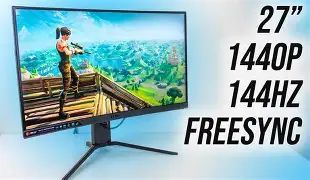
The Optix MAG271CQR is best understood as a 27-inch, curved, 2560×1440 (QHD) gaming monitor built around a VA-style experience: strong contrast and a punchy look, with motion tuning aimed at high refresh rates. That combination can be a sweet spot for many buyers—especially those coming from 1080p who want a sharper image and a more immersive curve.
It is not a dedicated professional color grading monitor, nor is it a perfect “one monitor for everything” solution if the buyer’s top priority is flawless motion clarity, ultra-precise color work, or fully consistent brightness across every unit. It can be excellent in the right context and frustrating in the wrong one.
Detailed Product Review & Real-World Analysis
Design, Build, and Everyday Ergonomics
In a typical gaming desk setup, the MAG271CQR’s curved 27-inch footprint feels immediately immersive. The curve can reduce the sense of “edge distance” compared with a flat 27-inch panel, which many users appreciate for RPGs, racing games, and general entertainment.
Ergonomics matter more than most buyers expect. A monitor can look perfect on a spec sheet and still be irritating daily if it can’t be positioned comfortably. Many buyers also underestimate how much the stand design and adjustment range affect neck and shoulder strain during long sessions—especially for hybrid gaming/work use.
Resolution and Screen Size: Why QHD at 27 Inches Is a Key Selling Point
One of the strongest reasons to choose this model is the combination of QHD resolution and a 27-inch size. For many people, this is the “sweet spot” where text and UI elements are sharper than 1080p, but the GPU requirement isn’t as intense as 4K. In daily use, this can mean:
- Cleaner text rendering for documents, spreadsheets, and browsing
- More workspace in creative tools and IDEs
- Sharper in-game detail without needing extreme anti-aliasing
However, that sharper image only pays off if the buyer’s hardware and settings support it—one of the biggest mistake areas covered later.
Refresh Rate and Motion: The ���Fast” Part Has Caveats
High refresh rate monitors can feel transformative: mouse movement becomes more immediate, camera panning in games is smoother, and fast flick shots can feel more controlled. The MAG271CQR is positioned to deliver that experience.
But motion performance is not only about refresh rate. It’s also about pixel response behavior and tuning. In real usage—especially in darker scenes—VA-type behavior can show more smearing than some buyers expect. This does not necessarily ruin the experience, but it can be noticeable in:
- Dark corridor shooters and horror games
- Nighttime racing tracks
- High-contrast UI scrolling (white text on dark backgrounds)
Buyers who mainly play competitive shooters and care most about motion clarity often compare against fast IPS or high-end TN experiences. If expectations are not aligned, this becomes a “why does it feel less clear than I thought?” moment.
Contrast, Blacks, and “Pop” in Games and Video
Where the MAG271CQR often wins hearts is the contrast-rich look. Many buyers care about deep blacks and strong separation in shadows—especially for cinematic single-player games. In a dim room, that contrast can make scenes feel more dramatic and immersive than some brighter-but-lower-contrast displays.
That said, shadow-heavy content can be a double-edged sword. If the buyer uses aggressive brightness/contrast settings or misconfigured “gaming” presets, detail can crush in dark areas. The monitor can look impressive while hiding information a player needs, like enemies in shadows or subtle terrain shapes.
Color and Gamut: Great for Enjoyment, Needs Care for Accuracy
Many buyers want vivid color for games, streaming, and casual editing. The MAG271CQR can deliver a “punchy” presentation that looks exciting. The common mistake is assuming that “vivid” equals “accurate.”
For typical gaming and media viewing, vivid color can be a positive. For photo work, brand design, or any situation where colors must match across devices, the buyer should plan for calibration and consistent settings. Without that, it’s easy to end up with overly saturated reds or inconsistent skin tones—especially if switching between different display modes.
Connectivity and Compatibility: It’s Not Just Ports, It’s the Whole Chain
Even when a monitor is capable of high refresh and adaptive sync, the buyer’s results depend on the entire chain: GPU output, cable quality, driver settings, operating system refresh configuration, and the game’s own settings. Many “monitor problems” are actually configuration mismatches—such as running at 60 Hz unknowingly, or using the wrong port/cable combination.
Biggest Buying Mistakes (And How to Avoid Them)
Mistake #1: Buying for Competitive FPS Expecting “Zero Smear” Motion
Why it happens: The headline specs (high refresh rate and gaming branding) encourage the assumption that it will perform like the clearest esports displays.
What buyers typically notice: In fast, high-contrast motion—especially darker scenes—some people see trailing or smearing that feels distracting, particularly when coming from a fast IPS or TN.
How to avoid it:
Shop the latest Electronics picks on Amazon.
See Deals →- If competitive shooters are the primary use case, prioritize monitors known for top-tier motion clarity over contrast and curve.
- Test with the exact content that triggers issues: dark maps, quick strafes, and rapid camera pans.
- Use sensible response-time/overdrive settings rather than maxing them out; extremes can introduce artifacts.
Mistake #2: Underestimating GPU Requirements for 1440p High Refresh
Why it happens: Buyers upgrade the monitor first and assume their current GPU will “mostly be fine.” QHD at high refresh is significantly more demanding than 1080p.
What buyers typically notice: The monitor feels smooth on the desktop, but games struggle to stay at high frame rates. People then blame the monitor rather than recognizing a performance mismatch.
How to avoid it:
- Before buying, check benchmarks for the buyer’s favorite games at 2560×1440, not 1080p.
- Plan for settings optimization: reducing heavy options like ray tracing, ultra shadows, or excessive post-processing can restore smoothness.
- Set a realistic goal: stable high frame rates in esports titles are easier than in modern AAA games.
Mistake #3: Assuming “Curved” Automatically Improves Productivity
Why it happens: Curvature is often marketed as more immersive, which some interpret as “better for everything.”
What buyers typically notice: For spreadsheets, CAD lines, or layout work where straight lines and exact geometry matter, curvature can feel odd at first. Some people adapt quickly; others never love it.
How to avoid it:
- For heavy productivity and design, consider whether a flat panel would feel more natural.
- Position the monitor properly: the curve is most comfortable when the viewer is centered and at the intended distance.
- If the user regularly shares the screen in meetings, note that off-angle viewing and curve perception can affect how others see content.
Mistake #4: Confusing “Looks Great in the Store” With “Works Great at Home”
Why it happens: Store lighting and demo loops favor high brightness, saturated color, and dramatic contrast—conditions that differ from a home office or dim gaming room.
What buyers typically notice: At home, default presets can look too bright, too saturated, or too contrasty for long sessions, leading to eye fatigue or crushed shadow detail.
How to avoid it:
- Plan to spend time adjusting brightness, color temperature, and gamma for the room.
- For mixed work and gaming, consider keeping two profiles: one comfortable for productivity and one tuned for games.
- Use real content: a familiar game scene, a known photo set, and a text-heavy webpage are better than demo footage.
Mistake #5: Forgetting to Set the Refresh Rate in the Operating System
Why it happens: Many systems default to 60 Hz after connecting a new display. Some users assume “high refresh” is automatic.
What buyers typically notice: The monitor “doesn’t feel that different,” and the purchase seems underwhelming.
How to avoid it:
- Immediately verify the display refresh rate in the OS display settings.
- Confirm in the GPU control panel as well, especially when multiple monitors are connected.
- In games, set the correct refresh rate and disable frame caps that prevent higher FPS.
Mistake #6: Expecting Console Gaming to Match the PC Experience
Why it happens: Buyers read about high refresh benefits and assume consoles will automatically output high frame rates at 1440p.
What buyers typically notice: The console may output at different resolutions or refresh behaviors depending on the platform and game. The experience can still be good, but not always in the same “QHD high-refresh” way as PC.
How to avoid it:
- Check what the specific console and the specific games actually support (resolution and frame rate modes vary widely).
- Choose based on the primary system: if the buyer is mainly a console player, prioritize confirmed compatibility and preferred modes.
- Be realistic about what “120 Hz” modes look like in practice; they often use performance settings and dynamic resolution.
Mistake #7: Not Accounting for Viewing Distance and Desk Depth
Why it happens: Buyers focus on panel size and forget ergonomics. A 27-inch curved screen can feel too close on a shallow desk.
What buyers typically notice: Head movement increases, text feels larger than expected, or the curve feels exaggerated at close distances.
How to avoid it:
Looking for the best Electronics deals on Amazon?
Shop Amazon →- Measure desk depth and aim for a comfortable viewing distance where the curve feels natural.
- Consider using a monitor arm if the stand doesn’t position the screen ideally.
- Center the monitor properly; curves punish off-center positioning more than flat panels.
Mistake #8: Overpaying for Features They Won’t Use
Why it happens: “Gaming monitor” feature lists can push buyers to spend more than needed: fancy lighting, aggressive styling, or niche modes that rarely get used after the first week.
What buyers typically notice: The buyer ends up paying for secondary features instead of investing in what truly matters: panel performance, ergonomics, or a GPU upgrade to match 1440p.
How to avoid it:
- Write down the top three priorities: motion clarity, contrast, color accuracy, or ergonomics.
- Budget for the whole setup: a stronger GPU, a better chair, or a monitor arm can improve daily experience more than cosmetic extras.
- Focus on the features that affect every session: resolution, refresh, and comfort.
Pros & Cons
Pros
- Immersive 27-inch curved format that suits many gaming and media setups
- QHD (2560×1440) provides a sharp step up from 1080p for games and productivity
- High refresh rate experience that can feel very smooth when properly configured
- Contrast-rich presentation that many people prefer for cinematic games and video
- Good “all-rounder” potential for users balancing gaming, streaming, and general desktop use
Cons
- Motion in dark scenes may show smearing that bothers sensitive competitive players
- 1440p high-refresh gaming can be GPU-intensive, leading to unmet expectations without a capable system
- Out-of-box presets can be too intense for long work sessions if not tuned
- Curvature is subjective; it can feel less ideal for certain productivity tasks
- Consistency can vary like many consumer monitors, making careful setup and testing important
Comparison Table: Optix MAG271CQR vs. Typical Alternatives
Many buyers cross-shop this monitor against two common alternatives: a flat 27-inch 1440p IPS gaming monitor, and a 27-inch 1080p high-refresh esports-style monitor. The table below highlights how these categories usually compare in the ways buyers most often care about.
| What Buyers Care About | Optix MAG271CQR (27" Curved QHD Gaming) | Typical 27" Flat QHD IPS Gaming Monitor | Typical 27" Flat 1080p High-Refresh Esports Monitor |
|---|---|---|---|
| Sharpness & workspace | Strong: QHD at 27" feels crisp for mixed use | Strong: QHD at 27" also crisp, often excellent for text | Weaker: 1080p at 27" can look soft up close |
| Immersion | High: curved screen helps wrap-around feel | Medium: flat, but still large and detailed | Medium: flat; speed-focused rather than cinematic |
| Motion clarity for competitive FPS | Good, but can show more dark-scene smearing than some prefer | Often very good, depending on panel and tuning | Often excellent: tuned for speed, easier FPS targets |
| Contrast and black depth | Often a key strength for enjoyment and dark-room play | Usually moderate: can look “grayish” in dark rooms | Varies, often not the focus |
| GPU demand | Higher: QHD at high refresh needs more power | Higher: same QHD demand | Lower: 1080p makes high FPS easier |
| Best for | Mixed gaming + media, players who value contrast and immersion | Mixed use + competitive play, users who want strong motion with flat geometry | Competitive esports players prioritizing FPS and clarity over resolution |
Buying Guide: How to Decide if the MAG271CQR Fits
Step 1: Identify the Primary Use Case (Be Honest)
Most “bad monitor purchases” happen when the buyer tries to optimize for an imagined lifestyle instead of actual weekly habits. The MAG271CQR tends to fit best when gaming and entertainment are major priorities and when the buyer wants a richer image rather than the fastest possible response feel.
- Best match: single-player games, RPGs, action-adventure titles, racing, streaming, and mixed desktop use
- Potential mismatch: high-rank competitive FPS where the player is extremely sensitive to motion artifacts
Step 2: Confirm Hardware Can Deliver the Experience
For a PC buyer, the question is not “Can it run 1440p?” but “Can it run the buyer’s games at 1440p with frame rates that justify a high-refresh monitor?” Many buyers care about:
- Maintaining high FPS without constant stutter
- Keeping input lag low by avoiding heavy settings that force instability
- Not having to drop resolution just to feel smooth
If the system is borderline, the buyer can still enjoy 1440p, but it may require accepting medium settings, using upscaling features where available, or focusing on smoother frame pacing rather than chasing the maximum refresh ceiling at all times.
Step 3: Plan the Desk Setup
Ergonomics and viewing distance shape perceived quality. A well-placed monitor can feel premium; a poorly placed one can feel tiring.
- Desk depth: enough distance reduces the feeling of “too much curve” and improves comfort
- Centering: curves reward being centered; off-axis viewing can feel less uniform
- Height: the top third of the screen should not force neck extension for long sessions
Step 4: Decide What Matters More: Contrast or Motion
This is the single most important decision point for shoppers comparing categories.
If the buyer cares most about:
- Contrast and cinematic punch for games and movies, the MAG271CQR-style experience is often appealing.
- Pure motion clarity for competitive play, a different panel category may better fit expectations.
Step 5: Evaluate Work Needs (Text, Meetings, and Long Sessions)
Many buyers now use one monitor for both gaming and work. The MAG271CQR can be a strong mixed-use monitor, but buyers should plan for a “work profile” that is comfortable for hours:
- Lower brightness to reduce fatigue
- Use a neutral color temperature for documents
- Adjust scaling so text is readable without leaning in
For video calls and collaboration, remember that a curved screen is a personal-viewing optimization. It can still work for meetings, but it is not inherently a productivity upgrade the way additional screen area or a second monitor might be.
Step 6: Set Up Correctly on Day One
To avoid the most common “I don’t get the hype” moment, buyers should do a short setup checklist immediately:
- Set the monitor to its intended refresh rate in the operating system
- Confirm the game is running at 2560×1440 and at the intended refresh setting
- Choose a balanced response/overdrive setting (avoid extremes)
- Calibrate brightness for the room (especially for late-night use)
- Test a few known scenes: dark levels, bright outdoor maps, and text-heavy pages
Common Buyer Profiles: Who Usually Loves It vs. Who Regrets It
Typically Happy Buyers
These are the buyers who most often report satisfaction:
- Players upgrading from a 24-inch 1080p display who want a clear jump in sharpness and immersion
- Gamers who primarily play story-driven titles and value contrast for atmosphere
- Mixed-use users who want one monitor for games, streaming, and general productivity
- People who enjoy a curved screen feel and sit at a comfortable distance
Typically Disappointed Buyers
These are the buyers who most often feel the purchase didn’t match expectations:
- Competitive FPS players expecting top-tier clarity in every motion scenario
- Users with midrange GPUs who expected high FPS at QHD with ultra settings
- Color-critical creatives who assumed “vivid” equals “accurate” without calibration
- People who dislike curved geometry for spreadsheets, layout work, or precise line tasks
Conclusion
The Optix MAG271CQR can be an excellent monitor when it’s bought for the right reasons: a sharp 27-inch QHD image, an immersive curved format, and a high-refresh experience that feels smooth in everyday play. The biggest buying mistakes come from mismatched expectations—especially expecting esports-class motion behavior in all scenarios, or expecting a QHD high-refresh monitor to transform gaming without the GPU performance to support it.
Buyers who start by clarifying their primary use case, confirming their hardware can realistically deliver 1440p performance, and planning a proper day-one setup are the ones most likely to be happy long-term. In that context, the MAG271CQR tends to land where it’s strongest: a visually engaging, immersive gaming display that can also handle daily desktop life—so long as the buyer tunes it for the room and uses it within its intended strengths.